
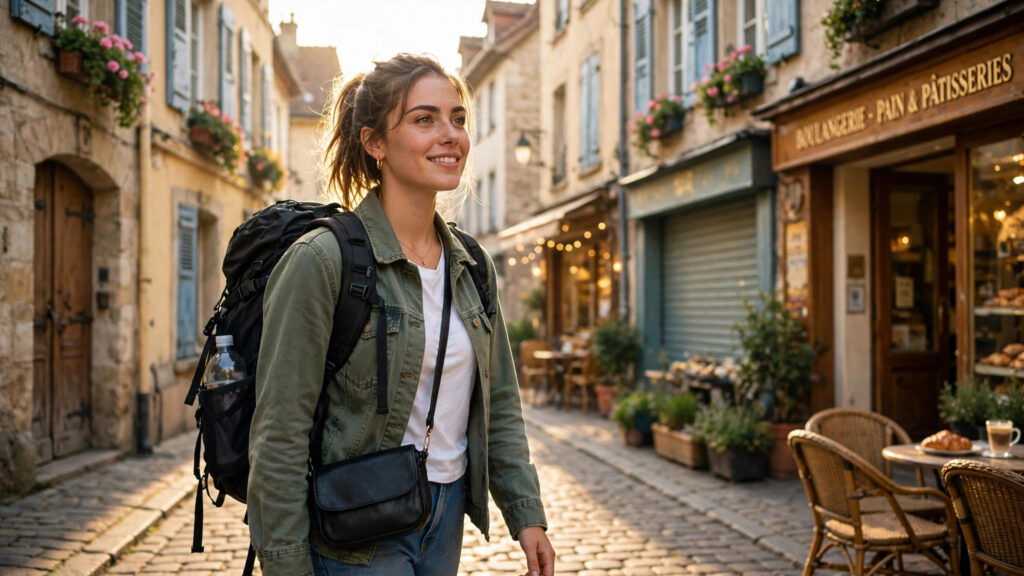
Millions of women travel alone every year, and most trips go smoothly. Solo travel does carry a few specific risks — unwanted attention, scams aimed at people on their own, and having nobody to watch your back when something goes wrong. The answer is not fear; it is preparation.
Before You Go: Research the Destination, Not Just the Sights
Read your government’s official travel advice for the destination, including any section on risks for women travellers. It lists local laws, scams, areas to avoid and the emergency number. Also learn the local customs: in some places you should cover your shoulders or hair in religious sites, and dressing in line with local norms draws far less attention.
Share Your Itinerary and Location
Tell a trusted person at home your flight numbers, accommodation addresses and rough daily plans, and check in with them regularly. Share your live location through your phone (Find My on iPhone, or an app such as Life360 on Android). Save scans of your passport, visa, insurance and bookings in a secure cloud folder, and carry paper copies separately from the originals.
Start Small on Your First Solo Trip
If this is your first time travelling alone, you do not have to start with a month in a country you have never visited. A weekend in a nearby city, or a well-travelled destination with good public transport, is a sensible first step. Confidence grows with each trip.
Arrive in Daylight With the First Night Booked
Arriving in a new place after dark, tired and unsure where you are going, is when most problems start. Book your first night before you leave, know exactly how you will get there, and try to arrive in daylight. Save your accommodation’s address and phone number offline, and download an offline map of the area before you land.
Choose Accommodation Carefully
Well-reviewed hotels and hostels are the safest choice for a first solo trip. Look for places with many recent reviews that mention solo women travellers, a 24-hour front desk, and a location near restaurants and shops rather than on a deserted street. Female-only dorms in hostels are a good option if you want company as well as security.
Get Around Safely
Plan your transport before you leave the hotel: check the route, the cost and how long it takes. Use official taxis or trusted ride-hailing apps, check the licence plate, car and driver name before getting in, sit in the back seat and share the trip with a contact. Never take an unmarked taxi from the street. On public transport, keep your bag in front of you and avoid empty carriages late at night.
Blend In and Keep Valuables Out of Sight
Looking like a tourist makes you a target. Dress in line with local norms, avoid flashy jewellery and expensive-looking bags, and do not walk around staring at your phone. A small cross-body bag with a zip, worn in front, is harder to snatch than a backpack. Keep your passport, spare card and most of your cash in a money belt or hidden pocket, and carry only what you need for the day.
Watch Your Drink and Your Boundaries
Keep your drink in sight and never leave it unattended; if it tastes odd, leave it and get help. Limit alcohol so you stay in control of your decisions, and avoid walking home alone late at night — take a trusted taxi instead. Trust your instincts: if a person or a situation feels wrong, leave immediately. You do not owe anyone politeness, a conversation or an explanation.
Carry a Small Safety Kit
A power bank (so your phone never dies when you need it), a doorstop or portable door lock for hotel rooms, a whistle or personal alarm, and a scarf (useful for temples, cold buses and sun) cover most situations. Check what is legal where you are going — pepper spray, for example, is illegal in many countries.
Stay Safe Online
Post photos after you have left a place, not in real time, and do not tell strangers you are travelling alone. If asked, saying you are meeting friends later is a simple, effective answer.
If Something Goes Wrong
Save the local emergency number and your embassy’s contact details in your phone before you travel. If you are harassed or assaulted, report it to the local police and contact your embassy, which can help you find English-speaking medical and legal support. If your passport is stolen, your embassy can issue emergency travel documents.
Budget for Safety, Not Just Fun
Safety sometimes costs a little extra: a hotel instead of a remote apartment, a taxi instead of a midnight walk, a well-reviewed hostel instead of the cheapest bed. That is money well spent. If you are planning a trip on a tight budget, our guide to how to travel Europe on $50 a day in 2026 shows how to keep the big costs under control without cutting corners on safety.
FAQ
Is it safe for a woman to travel alone?
Yes, with preparation. Millions of women travel solo safely every year. The risks are real but manageable: research your destination, share your plans, choose well-reviewed accommodation, and trust your instincts.
What is the safest first solo trip for a woman?
A short trip to a well-travelled destination with good public transport, low crime and plenty of other travellers — for example a city break in western or northern Europe, Japan or New Zealand.
Should I stay in a hotel or a hostel when travelling solo?
Both can be safe. Hotels offer privacy and a 24-hour front desk; hostels offer company and female-only dorms. Choose based on recent reviews from other solo women travellers, not on price alone.
What should I pack for solo travel safety?
A power bank, a cross-body bag with a zip, a money belt or hidden pocket for backups, copies of your documents, a doorstop or portable lock, and a whistle or personal alarm where legal.
Conclusion
Solo female travel safety is mostly preparation: research the destination, share your plans, arrive in daylight, choose your accommodation carefully, and keep your instincts switched on. None of these tips requires courage or special equipment — just a little planning before you go.