Yes, you can start a cleaning business with no money. Most homes already have the basics, and clients care far more about reliability and a good result than about a branded van or an expensive kit. This solo plan shows how to start small, win your first clients for free, and grow only when income allows it.
What Services Should You Offer?
Start with what you can already do well. Regular home cleaning is the simplest place to begin: dusting, vacuuming, mopping, bathrooms and kitchens. People want these done weekly or fortnightly, which means repeat income. Once you are confident, add deep cleaning, end-of-tenancy cleaning, or office cleaning for small local businesses. Keep your list short at first. Doing three services brilliantly beats offering ten you cannot deliver well. Let local demand shape what you add next.
Finding Your First Clients Without Spending a Penny
Your first clients are usually closer than you think. Tell friends, family, neighbours and colleagues that you have started, and ask them to pass the word on. A post on your social media or in a local community group costs nothing and often brings the first enquiry. Word of mouth is your strongest tool at this stage. Ask every happy client if they know anyone else who needs help, and offer a small thank-you, such as one extra room cleaned free, for a referral. Free local listings and community noticeboards are worth trying too, but avoid paid advertising until you have steady income.
How to Price Your Work
Find out what other cleaners in your area charge per hour, then set a rate in the same range. Charging far less than everyone else may win work quickly, but it makes the business hard to sustain, so aim for a fair local rate instead. For larger jobs, such as a deep clean or an end-of-tenancy clean, quote a fixed price based on the size of the home and the time it will take. Always agree the price in writing before you start, and be clear about what is included. Keep a simple record of every job and payment.
Supplies You Already Own
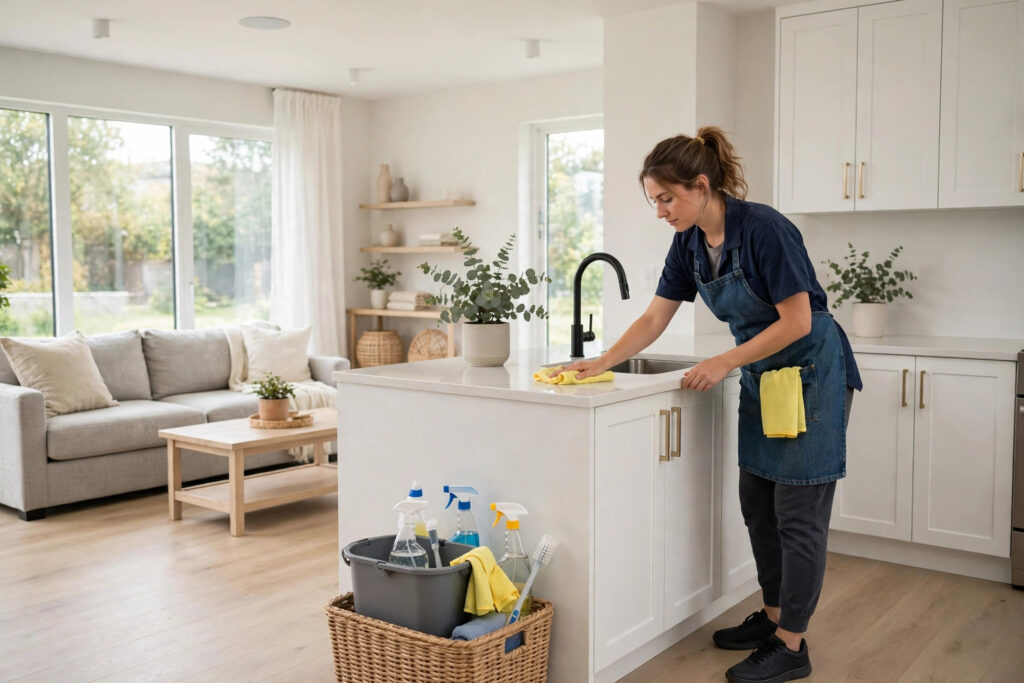
You do not need a professional kit to start. Most homes have a vacuum cleaner, a mop and bucket, cloths, a broom and basic cleaning products, and these are enough for your first jobs. Use what you have, and replace items only when they wear out. Many clients are happy for you to use their own products and equipment, which removes the cost altogether. If you do buy supplies, start with the essentials: an all-purpose cleaner, cloths, gloves and bin bags. Buy small amounts, keep receipts, and add to your kit gradually from what you earn.
Keeping It Legal
The rules for starting a small business vary by location, so treat this as general information and check what applies where you live. In many places you will need to register as self-employed or as a sole trader, keep records of your income and expenses, and set aside money for tax. Some areas may require a business licence, and some clients may ask about insurance. Public liability insurance is worth considering once you can afford it, because it protects you if something is damaged or someone is injured while you work. If you hire anyone later, or clean commercial premises, check the local rules again first.
Frequently Asked Questions
Do I need experience to start a cleaning business?
No formal experience is required, but you do need to clean thoroughly and reliably. If you have kept your own home clean, you already have the core skills. Work from a checklist and ask early clients for honest feedback.
How much can I earn in the first month?
That depends on your area, your hours and how quickly you find clients, so no fixed figure can be promised. Most solo cleaners earn a modest amount in the first month while building a regular round of clients. Income grows as repeat bookings replace one-off jobs.
Should I clean with the client’s supplies or my own?
Either can work. Using the client’s supplies keeps your costs at zero, while bringing your own gives you more control over quality. Agree it with each client before the first visit so there are no surprises.
When should I spend money on the business?
Spend only when the business can pay for it. A good time to invest is when you have regular weekly clients and can afford insurance, better equipment or a simple website from your earnings. Until then, keep costs as close to zero as possible.
Conclusion
Starting a cleaning business with no money is realistic because the work itself is the product, and the tools are already in most homes. Choose a small set of services, find your first clients through people you know, price fairly, and use what you already own. Keep your records tidy, check the local rules for your area, and reinvest your early earnings slowly. With steady, reliable work, a solo cleaning round can grow into a proper income.
For a broader look at the first steps, read our guide on starting a small business with no money.