
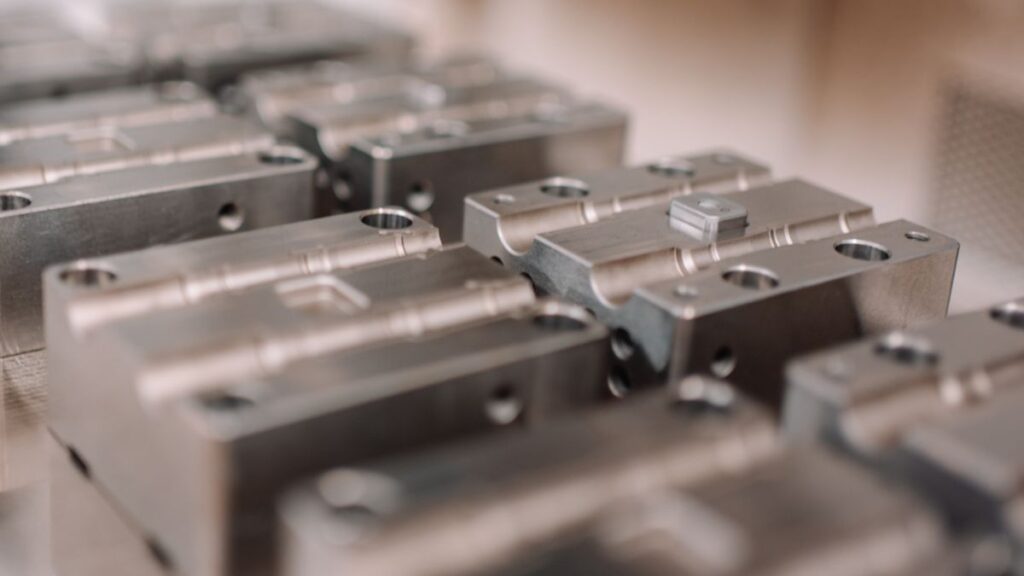
There are words that swagger into the industrial lexicon wearing a hard hat and steel-toed boots. And then there are words that slip in quietly, almost anonymously, reshaping entire sectors while no one’s quite sure when they arrived.
Repmold belongs to the second camp.
It doesn’t shout. It doesn’t trend on TikTok. It doesn’t pitch itself like a Silicon Valley wunderkind promising to “disrupt” your breakfast cereal. But if you trace the fingerprints of modern manufacturing—from bespoke medical components to precision automotive interiors—you’ll find repmold etched into the margins of the blueprint.
So what exactly is repmold? A method? A philosophy? A technology? A hybrid of all three?
In the most grounded sense, repmold refers to replication-based molding techniques—a manufacturing approach focused on producing high-fidelity duplicates of original models, components, or prototypes using advanced mold systems. But that sterile definition doesn’t quite capture its electricity.
Repmold is replication, refined.
Replication, accelerated.
Replication, weaponised for precision.
And in a world obsessed with scale, speed, and customization, that matters.
The Anatomy of Repmold
Strip the jargon. Remove the acronyms. What remains is elegantly simple.
Repmold is about creating accurate molds from master patterns, then using those molds to produce multiple identical components with exceptional precision. The difference between repmold and conventional molding lies not in the concept of duplication—but in how obsessively exact the duplication becomes.
Think:
-
Sub-millimetre tolerances
-
Complex geometries
-
Smooth surface fidelity
-
Consistency across hundreds or thousands of iterations
Where traditional molding sometimes accepts “close enough,” repmold aims for “indistinguishable.”
The Core Process
While variations exist across industries, the repmold workflow generally follows five disciplined stages:
-
Master Model Creation
A prototype—often designed via CAD and produced using CNC machining or 3D printing—serves as the original reference. -
Mold Design & Engineering
Engineers analyse shrinkage factors, material flow, stress distribution, and thermal behaviour. -
Mold Fabrication
Using high-grade metals, silicone, or composite materials, the mold is crafted with extreme precision. -
Material Injection or Casting
Thermoplastics, resins, elastomers, or metals are introduced under controlled pressure and temperature. -
Replication & Quality Control
The final products are inspected for dimensional accuracy, surface finish, and structural integrity.
It sounds methodical because it is. Repmold is less about brute force manufacturing and more about orchestration.
Where Repmold Shows Up (Even If You Don’t Notice)
1. Automotive Interiors
Open the door of a modern vehicle. Run your hand along the dashboard. That uniform texture? That consistent curvature across thousands of vehicles?
Repmold.
Manufacturers use replication molding to ensure components such as panels, housings, vents, and trims maintain identical specifications across global production lines.
Precision here isn’t aesthetic vanity. It’s safety. Fit matters. Alignment matters. Heat tolerance matters.
2. Medical Device Manufacturing
Surgical tools, diagnostic casings, and prosthetic components demand accuracy bordering on obsessive. A deviation of 0.2 mm isn’t “minor.” It’s unacceptable.
Repmold techniques allow for:
-
Sterile-compatible material casting
-
Micro-detail replication
-
Tight tolerance production
This is replication as responsibility.
3. Consumer Electronics
Smartphones, earbuds, wearable tech—these are design-forward industries obsessed with seamless integration.
To achieve that flush, uninterrupted finish, repmold processes are often deployed for:
-
Micro enclosures
-
Button assemblies
-
Structural frames
-
Connector housings
If it clicks perfectly into place, repmold likely played a part.
Repmold vs Traditional Injection Molding: A Necessary Distinction
Let’s be clear: repmold is not simply injection molding wearing a new name badge.
Injection molding is a broad category. Repmold is a precision-focused subset or methodology within replication manufacturing.
Here’s where the distinction sharpens:
| Feature | Traditional Injection Molding | Repmold Approach |
|---|---|---|
| Tolerance Focus | Moderate | Ultra-tight |
| Prototyping Integration | Often separate | Integrated |
| Surface Fidelity | Functional | High-detail replication |
| Customisation Flexibility | Moderate | High |
Repmold is often preferred when the stakes are higher—when form and function must align perfectly.
The Rise of Micro-Repmold: When Tiny Is Titanic
As industries miniaturise, repmold scales down with them.
Micro-repmold techniques are now being deployed to replicate:
-
Microfluidic devices
-
Biomedical chips
-
Optical components
-
Miniature connectors
This is where physics begins to argue back. At microscopic scales, material flow becomes unpredictable. Surface tension shifts. Cooling rates alter behaviour.
Yet repmold adapts—through advanced mold coatings, micro-channel design, and AI-assisted thermal modelling.
Yes, AI is in the room now.
And repmold is smarter for it.
Digital Integration: The CAD-to-Mold Pipeline
Repmold doesn’t live in isolation from software. In fact, it thrives on digital fluency.
Modern repmold systems integrate:
-
3D CAD modeling
-
Simulation software for material behaviour
-
Finite Element Analysis (FEA)
-
Predictive failure modelling
This reduces trial-and-error cycles dramatically. The mold isn’t just built—it’s rehearsed digitally first.
And that’s a game changer.
The result? Fewer defective runs. Faster time-to-market. Lower material waste.
Efficiency becomes not just a metric—but a philosophy.
Sustainability: The Quiet Advantage
Let’s talk waste.
Traditional manufacturing can bleed material inefficiencies. Scrap rates. Failed batches. Overproduction.
Repmold’s precision reduces:
-
Material overuse
-
Rejected components
-
Energy waste in re-runs
Additionally, many repmold processes now utilise recyclable thermoplastics and bio-based polymers.
It’s not a silver bullet for sustainability—but it’s a step toward responsible scaling.
And in 2026, responsibility is currency.
The Cost Question: Is Repmold Expensive?
Short answer: upfront, yes.
High-precision mold fabrication is not cheap. Advanced simulation tools aren’t either.
But long-term?
Repmold can lower:
-
Defect rates
-
Rework costs
-
Quality assurance expenditure
-
Warranty claims
When calculated across production cycles, the economics often tilt in its favour.
Precision pays.
Repmold and Customisation: The Mass-Personalisation Frontier
Here’s where things get interesting.
Consumers no longer want generic. They want tailored. Slightly different. Personalised.
Repmold supports this shift through modular mold systems and rapid prototyping integration.
That means:
-
Limited-run product variations
-
Regional design tweaks
-
Iterative product updates
All without dismantling entire production lines.
In a world where trends mutate weekly, agility is survival.
Repmold provides that agility without sacrificing scale.
The Engineering Mindset Behind Repmold
What separates repmold practitioners isn’t just equipment—it’s thinking.
They approach design with replication in mind from the start. This includes:
-
Draft angle planning
-
Flow path optimisation
-
Thermal expansion compensation
-
Surface texture translation
In other words, the final product is reverse-engineered before it even exists.
That anticipatory design mentality is what makes repmold feel almost predictive.
The Future of Repmold: What’s Coming Next?
The horizon is crowded with possibilities:
1. AI-Optimised Mold Design
Algorithms that simulate thousands of stress scenarios before metal ever touches machine.
2. Smart Molds
Embedded sensors tracking temperature, pressure, and wear in real time.
3. Hybrid Materials
Multi-material replication within a single mold cycle.
4. Ultra-Fast Prototyping Integration
From digital file to production-ready mold in days, not weeks.
Repmold isn’t static. It’s evolving in tandem with automation, machine learning, and advanced materials science.
Why Repmold Matters More Than You Think
It’s easy to romanticise innovation as flashy. As loud. As app-based.
But innovation also happens in factories. In the hum of precision tooling. In the quiet repetition of perfection.
Repmold represents:
-
Accuracy as discipline
-
Replication as craft
-
Scale without compromise
It sits at the intersection of engineering rigour and manufacturing artistry.
And in a world racing toward speed, repmold insists on something radical:
Do it right. Then do it again. Exactly the same.
Final Reflection: The Invisible Architecture of Consistency
The best manufacturing technologies often operate invisibly. You don’t see them—but you feel their effects.
When a product fits flawlessly.
When components align seamlessly.
When quality feels consistent across continents.
That’s not luck.
That’s repmold at work.
Not glamorous. Not headline-hungry. But foundational.
And in the ecosystem of modern industry, foundations are everything.