
Introduction
The phrase cesta roman often appears in historical discussions, travel literature, and cultural texts connected to ancient Europe. Although the words themselves may sound simple, the concept behind them carries deep historical significance.
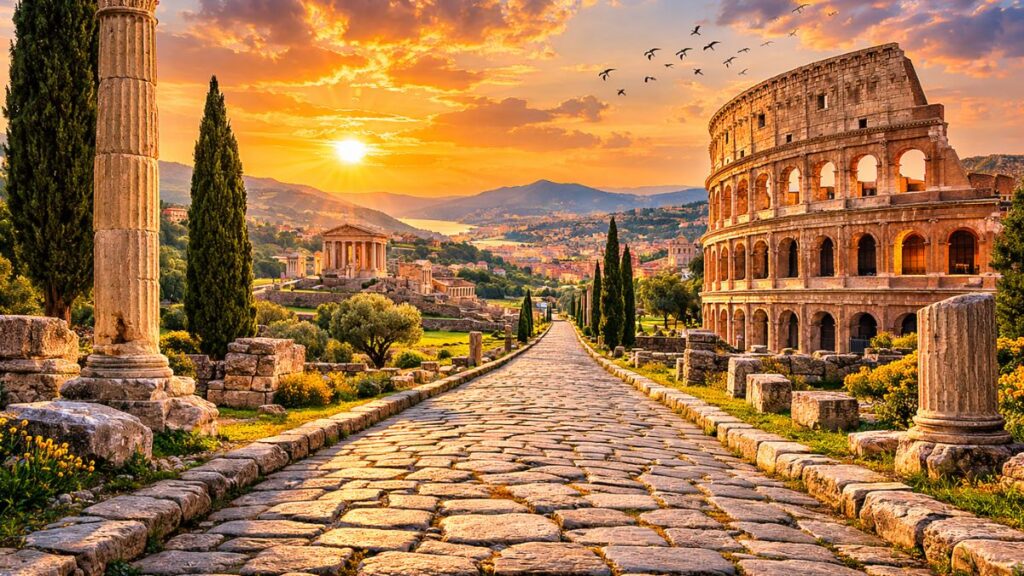
In many contexts, cesta roman refers to a Roman road or pathway associated with the Roman civilization, particularly the vast network of roads built during the Roman Empire. These roads connected cities, enabled trade, strengthened military logistics, and helped shape the development of European infrastructure.
Today, historians, travelers, and cultural researchers continue to explore these ancient routes. Some remain visible after thousands of years, while others exist only in historical records.
Understanding the meaning of this term offers insight into Roman engineering, cultural influence, and historical transportation networks that changed the course of Western civilization.
What Does Cesta Roman Mean?
The term cesta roman can be interpreted linguistically and historically.
Linguistic meaning
In several European languages:
-
Cesta generally means road, route, or path
-
Roman refers to Roman civilization or the Roman Empire
Combined, the phrase essentially translates to “Roman road” or “Roman pathway.”
However, the meaning can extend beyond language and into history.
Historical interpretation
Historically, the concept is often linked to:
-
Roads constructed by Roman engineers
-
Trade routes connecting Roman cities
-
Military supply routes used by Roman legions
-
Cultural pathways spreading Roman influence
Because of this, the phrase is sometimes used symbolically to describe the legacy of Roman infrastructure across Europe.
Erothto Explained: Meaning, Uses, and Why the Term Is Gaining Attention Online
The Historical Significance of Cesta Roman
The Roman Empire created one of the most advanced transportation systems of the ancient world.
Roman roads were not simply dirt paths. Instead, they were carefully engineered structures designed for durability and efficiency.
Key purposes of Roman roads
Roman roads served several important functions:
-
Military movement and logistics
-
Trade and commerce
-
Administrative communication
-
Cultural expansion
These roads allowed messages, goods, and armies to move quickly across vast distances.
The scale of the Roman road network
At its peak, the Roman Empire maintained a massive road system.
| Feature | Description |
|---|---|
| Total Road Length | Over 400,000 km of roads |
| Paved Roads | About 80,000 km stone paved |
| Main Purpose | Military and trade transportation |
| Regions Covered | Europe, North Africa, Middle East |
This enormous network helped maintain control over territories stretching from Britain to the Middle East.
How Roman Roads Were Built
Roman engineering was highly advanced for its time. Builders followed specific construction techniques to ensure roads would last for centuries.
Layers of construction
Roman roads typically included multiple structural layers.
| Layer | Function |
|---|---|
| Foundation stones | Provided stability |
| Crushed rock layer | Improved drainage |
| Gravel or sand layer | Added structural support |
| Paved stone surface | Created durable road surface |
This layered approach made Roman roads incredibly strong. Many segments remain visible even today.
Engineering features
Roman engineers also included advanced design features such as:
-
Road camber for water drainage
-
Milestones marking distances
-
Roadside ditches
-
Bridges and tunnels
These innovations made travel faster and safer.
Famous Examples of Roman Roads
Several well-known Roman roads still exist or remain historically important.
Via Appia
Often called the “Queen of Roads,” the Via Appia connected Rome to southern Italy.
Key characteristics:
-
Built in 312 BC
-
Used for military campaigns
-
Later became a major trade route
Parts of the road still exist today.
Via Egnatia
This road connected the Adriatic Sea with Byzantium (modern Istanbul).
It served as a key corridor between:
-
Western Roman territories
-
Eastern Mediterranean regions
Watling Street
Located in Britain, this Roman road connected important cities including:
-
Londinium (London)
-
Verulamium (St Albans)
-
Viroconium (Wroxeter)
Many modern highways follow similar routes.
Cultural Influence of Roman Roads
The impact of Roman roads went far beyond transportation.
Spread of culture
Roman roads helped spread:
-
Latin language
-
Roman law
-
Architectural techniques
-
Cultural traditions
As travelers moved along these routes, ideas and customs moved with them.
Economic development
Trade flourished along Roman roads.
Merchants transported goods such as:
-
Olive oil
-
Wine
-
Grain
-
Textiles
-
Metals
Cities located along these routes often became major economic centers.
Why Cesta Roman Still Matters Today
Even though the Roman Empire ended centuries ago, its infrastructure continues to influence modern transportation.
Modern roads follow ancient paths
In many regions, modern highways and roads follow the same routes established by Roman engineers.
This is particularly true in parts of:
-
Italy
-
France
-
Spain
-
Britain
-
the Balkans
Tourism and historical exploration
Roman roads have become popular travel destinations.
Tourists and historians often explore:
-
Preserved Roman road segments
-
Archaeological sites
-
Historic travel routes
These paths provide a direct connection to ancient history.
Benefits and Limitations of Roman Road Systems
Pros
Roman roads provided several advantages:
-
Long-lasting construction
-
Efficient military movement
-
Faster communication across the empire
-
Improved trade networks
Cons
Despite their innovation, Roman roads also had limitations.
-
High construction cost
-
Labor-intensive building process
-
Vulnerability during invasions
-
Maintenance required over time
Even so, their durability remains impressive.
Common Mistakes When Interpreting Historical Terms
Many people misunderstand the phrase cesta roman due to translation or context issues.
Misinterpreting language origins
Some assume the term refers to a specific road rather than a general concept of Roman roads.
Ignoring regional variations
The phrase may appear in different languages with slightly different meanings.
Overlooking cultural context
Historical phrases often carry symbolic meanings beyond literal translation.
Recognizing these nuances helps avoid confusion.
Best Practices for Studying Roman Roads
Researchers and travelers interested in Roman roads can follow several useful approaches.
Explore archaeological resources
Reliable information can be found through:
-
Museums
-
Archaeological databases
-
Historical research publications
Visit preserved road sites
Many preserved Roman roads exist across Europe. Visiting these locations offers valuable historical insight.
Study ancient maps and texts
Ancient Roman maps, itineraries, and historical writings provide detailed information about early transportation systems.
These resources help historians reconstruct ancient routes with impressive accuracy.
Conclusion
The concept of cesta roman reflects more than just an ancient road. It represents one of the most remarkable infrastructure achievements in human history.
Roman roads connected cities, supported economic growth, and enabled the expansion of one of the greatest empires ever known. Their engineering brilliance allowed many of them to survive for thousands of years.
Today, these historic pathways continue to inspire historians, travelers, and engineers alike. By studying them, we gain valuable insight into the technological innovation and cultural influence of the Roman world.
Understanding this legacy reminds us that even ancient infrastructure can shape modern civilization.
FAQs
What does cesta roman mean?
The phrase generally refers to a Roman road or route connected to the Roman Empire’s transportation network.
How long were Roman roads?
The Roman Empire built over 400,000 kilometers of roads, making it one of the largest road networks in ancient history.
Why were Roman roads important?
They enabled military movement, trade expansion, and communication across the empire.
Do Roman roads still exist today?
Yes. Many Roman roads remain visible in parts of Europe and the Mediterranean.
Which is the most famous Roman road?
The Via Appia is one of the most famous and historically significant Roman roads.