Sore knees make exercise feel risky — but moving less usually makes knees worse, not better. The research is clear: gentle, regular movement strengthens the muscles that support the knee, reduces pain and improves function. A major review of 54 trials found that land-based exercise reduced knee osteoarthritis pain and improved quality of life.
The trick is choosing the right kind of movement. Low-impact exercise keeps at least one foot on the ground (or takes the weight off the joint entirely), so you get the benefits of activity without the pounding that flares knee pain. This article is general information only, not medical advice — if your knee is swollen, unstable or undiagnosed, see a clinician before starting a new routine.
1. Walking on Flat Ground
Walking is the simplest low-impact workout there is, and it is on the CDC’s list of joint-friendly activities for adults with arthritis. Walk on flat, even surfaces — pavements, tracks or shopping centres — and wear supportive shoes. Start with 10 minutes a day and build up gradually. Research suggests that walking up to 10,000 steps a day does not worsen knee osteoarthritis. If hills hurt, walk down them slowly or find a flatter route.
2. Swimming and Water Exercise
Swimming is close to the perfect knee-friendly workout: the water supports your weight, so your knees carry almost no load while your whole body works. Water aerobics and even gentle walking in a pool give you cardio and strength with zero impact. If you have access to a pool, aim for two or three sessions a week. Breaststroke can strain knees for some people, so try front crawl or backstroke if it bothers you.
3. Stationary Cycling
Cycling strengthens the quadriceps — the muscles at the front of the thigh that protect the knee — without any pounding. On a stationary bike you control the resistance and the pace, and you can stop the moment anything hurts. Set the seat high enough that your knee is only slightly bent at the bottom of the pedal stroke; a seat set too low increases knee strain. Start with 10–15 minutes at low resistance.
4. Elliptical Training
An elliptical mimics the motion of walking or running, but your feet never leave the pedals — so there is no landing impact at all. It is a good middle ground if walking feels too easy but running is out of the question. Hold the handles lightly rather than leaning on them, so your legs do the work.
5. Tai Chi
Tai chi combines slow, flowing movements with breathing and balance, and it was strongly recommended for knee osteoarthritis in the 2019 American College of Rheumatology guideline. It improves balance, joint mobility and leg strength, and it is gentle enough for almost anyone. Many community centres and online programmes offer beginner classes, and ten minutes a day is enough to start.
6. Gentle Yoga
Modified yoga improves flexibility, balance and the strength of the muscles around the knee. Choose a gentle or chair-based class, avoid deep knee bends and kneeling poses that hurt, and use blocks or a chair for support. Tell the instructor about your knees before the class so they can offer alternatives. Even a short daily routine of five or six poses can make a difference over a few weeks.
7. Strength Training for the Muscles Around the Knee
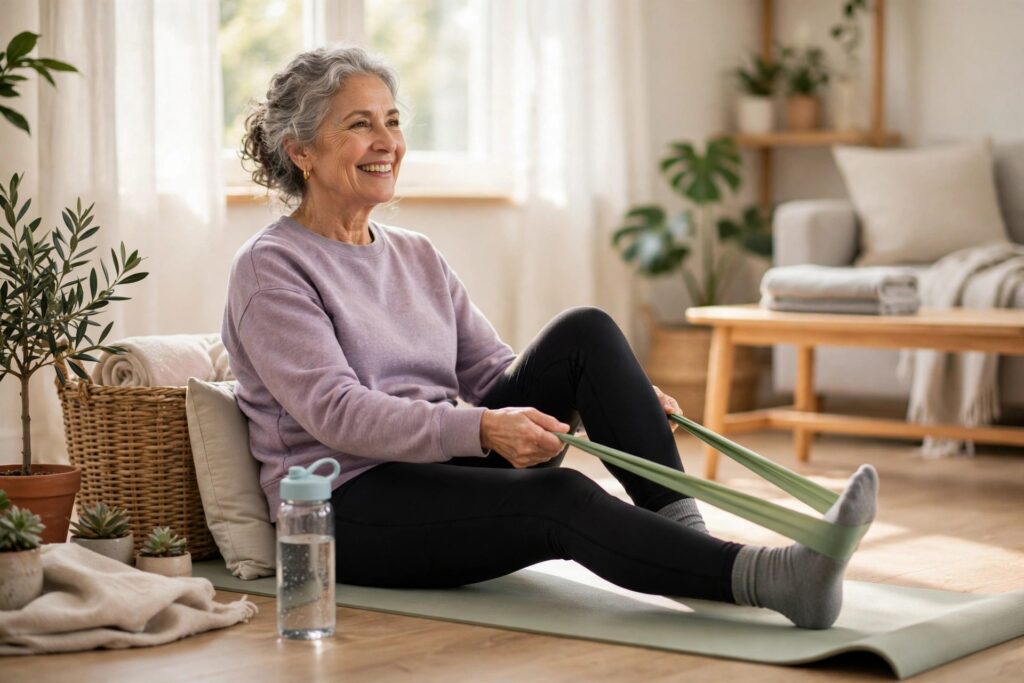
Strong legs take load off your joints, and strength work is the single most protective thing you can do for bad knees. The CDC recommends choosing weights or resistance bands that do not cause joint pain. Three moves to start with, holding a sturdy chair for balance:
- Glute bridges. Lie on your back, knees bent, and lift your hips. Two sets of 10–12. Builds glutes and hamstrings with almost no knee load.
- Wall sits. Slide down a wall to a comfortable depth — only as deep as feels fine — and hold for 15–30 seconds. Builds quad strength with the knee barely moving.
- Seated leg extensions. Sit in a chair and slowly straighten one leg, hold for a second, lower it. Two sets of 10–12 per leg.
Do strength work two days a week, and stop any move that causes sharp pain.
8. Rowing
A rowing machine builds cardio fitness and upper-body and back strength with a smooth, seated motion. Your knees bend and straighten, but without any impact or load. Keep the resistance low at first and focus on a smooth, controlled stroke. If full rowing bothers your knees, shorten the slide — you do not need to bend your knees fully.
9. Low-Impact Aerobics and Dancing
Low-impact aerobics — where one foot stays on the ground at all times, with no jumping — raises your heart rate through controlled movement. Dancing works the same way and is on the CDC’s joint-friendly list. A beginner dance or aerobics class, or a follow-along video at home, gives you cardio, coordination and balance in one session. Keep steps small and avoid twists and sudden turns.
How Much Should You Do?
The CDC suggests adults with arthritis work up to 150 minutes a week of moderate activity — for example, 30 minutes on five days — plus muscle strengthening on at least two days, in bouts as short as 5–10 minutes. That sounds like a lot, but you do not start there. Begin with 10 minutes a day of something gentle, add a few minutes each week, and let your knees set the pace.
For a ready-made gentle routine, see our 15-minute home workout for beginners over 40.
Moves to Avoid (For Now)
- Deep squats and jump squats. Swap for quarter squats or wall sits.
- Jumping lunges and deep forward lunges. Swap for supported split squats with a short range.
- Running and jump rope on flare-up days. Swap for cycling, swimming or marching in place.
- Knee-dominant leg work when everything hurts. Swap for glute bridges and Romanian deadlifts.
None of these are banned forever — many people return to them as their knees strengthen. But while pain is flaring, swaps keep you moving without setbacks.
FAQ
Is walking bad for knees with arthritis?
No — the opposite. Walking is one of the most recommended activities for knee arthritis, and research shows it does not worsen the condition. Walk on flat surfaces, wear supportive shoes, and build up gradually.
What is the best exercise for bad knees?
The best exercise is the one you will do regularly without flaring your knee. For most people, that means a mix: walking or cycling for cardio, plus gentle strength work like glute bridges and wall sits for the muscles that protect the joint.
Can exercise really reduce knee pain?
Yes. A major review of 54 trials found that land-based exercise reduced knee osteoarthritis pain and improved function and quality of life. Stronger muscles around the knee absorb impact and improve stability, which reduces strain on the joint itself.
Should I exercise when my knee hurts?
Gentle movement usually helps mild, achy pain — but stop if you feel sharp pain, or if the knee is swollen, hot or unstable. Rest on flare-up days, use ice if it helps, and see a clinician if pain persists or the knee gives way.
Conclusion
The best low impact workouts for bad knees are the ones that keep you moving without pounding the joint: walking, swimming, cycling, the elliptical, tai chi, gentle yoga, targeted strength work, rowing and low-impact aerobics. Start small — ten minutes a day — add strength work twice a week, and let your knees set the pace. Moving gently and regularly is not risky for sore knees. It is the best thing you can do for them.