
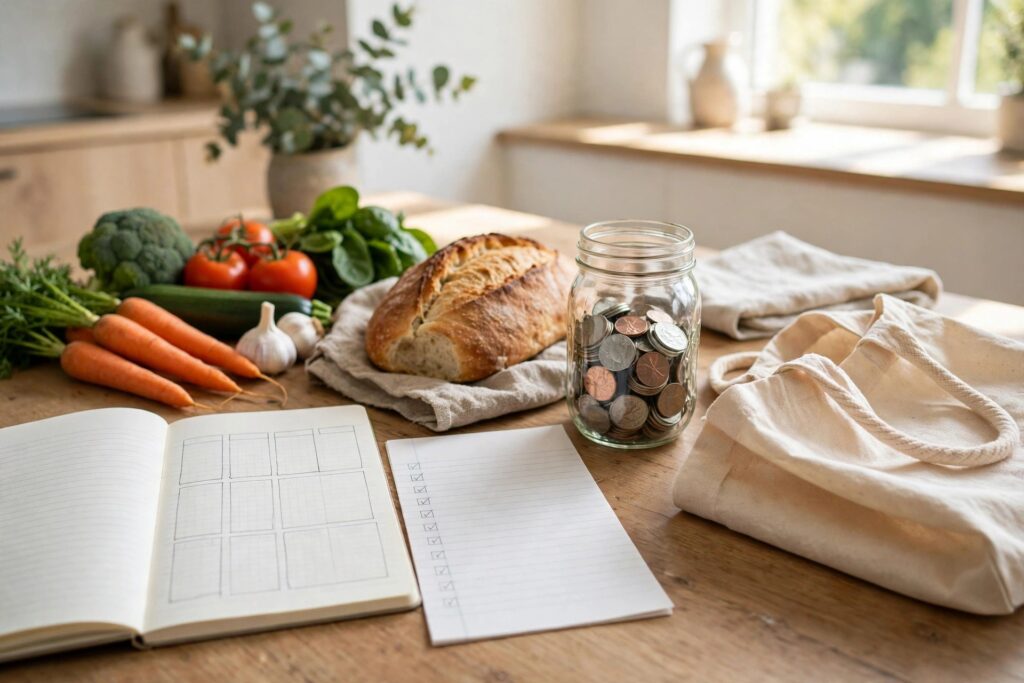
Groceries are one of the biggest bills a family faces — and one of the easiest to shrink without feeling deprived. For a family of four, the US Department of Agriculture’s thrifty food plan puts a basic monthly grocery budget at roughly $1,000, and many families spend far more. The good news is that a few structural changes, not extreme couponing, can cut that bill by $200 or more a month.
This guide explains how to save money on groceries for a family of 4 with a realistic plan: no coupon binders, no driving between five stores, just habits that actually stick. This is general information only, not personal financial advice.
Start With the Numbers
Before changing anything, know what you actually spend. Check your last three months of grocery spending — bank statements or receipts — and work out a monthly average. Then compare it with the USDA food plan benchmarks: for a family of four (two adults and two school-age children), the thrifty plan is roughly $1,000 a month, the low-cost plan around $1,125, and the moderate plan around $1,390. These are benchmarks, not targets, and costs vary by area — but they tell you whether your bill is high, and by how much.
Set a realistic target: cutting 15–20% is achievable for most families. On a $1,300 bill, that is $200–$260 a month, or $2,400–$3,100 a year.
Step 1: Plan Meals Before You Shop
Meal planning is the single highest-impact change you can make, because it attacks the biggest leak: food waste. The USDA estimates that 30–40% of the US food supply is wasted, and much of that happens at home. If you throw away 30% of a $1,000 grocery budget, you are binning $300 a month.
Use the 5-3-2 method:
- 5 dinners. Plan five dinners a week, not seven. Leave two nights for leftovers, takeaway or whatever is lingering in the fridge. Planning seven dinners when you will realistically cook five is how food ends up in the bin.
- 3 breakfasts. Pick three breakfast options for the week and rotate them. Nobody needs a different breakfast every morning.
- 2 lunch anchors. A batch of something — soup, a grain salad, a big pot of chilli — that covers most weekday lunches, plus a backup for days the batch runs out.
Plan around shared ingredients. If you buy a bunch of coriander for taco night, Wednesday’s grain bowl should use coriander too. If you roast a chicken on Sunday, Monday’s dinner should use the leftovers and Tuesday’s soup should use the carcass for stock. This one habit can cut food waste by 30–40%.
Step 2: Shop With a List — and Stick to It
Write your list from the meal plan, then check the pantry, fridge and freezer before you leave. Build at least one meal a week around something you already own. This alone can save $25–$40 a week.
In the store, the list is the law. Impulse buys — the snacks at the till, the “just in case” extras — are where budgets quietly die. Shop alone if you can, and never shop hungry: studies consistently show hungry shoppers buy more, and buy worse.
Step 3: Switch to Store Brands
Store-brand staples — tinned tomatoes, pasta, rice, oats, frozen vegetables, cleaning products — are usually 20–30% cheaper than name brands, and for most staples the quality is essentially the same. Switch 10–15 staple items and you can save $150–$200 a month on a family shop.
Start with the items where brand makes no difference: flour, sugar, salt, tinned beans, frozen peas. Keep the name brand only where your family genuinely notices a difference, and be honest about whether they actually do — blind taste tests usually surprise people.
Step 4: Buy Smart, Not Just Cheap
- Buy in season. Seasonal fruit and vegetables cost far less and taste better. A bag of apples in autumn is a different price from the same apples in spring.
- Buy frozen vegetables. Frozen peas, spinach and mixed vegetables are as nutritious as fresh, cost less, and never go off in the fridge.
- Cut back on meat, not meals. Beef prices have risen sharply — the USDA reported beef and veal prices up around 8–9% in 2026. Two or three meat-free dinners a week, built on beans, lentils, eggs and chicken, can save $50–$80 a month.
- Compare unit prices. The shelf-edge price per 100g or per litre tells you the real deal. The bigger pack is not always cheaper.
- Use a discount grocer for staples. Aldi and Lidl typically undercut traditional supermarkets by 20–30% on everyday staples, with comparable quality on most categories.
Step 5: Use Cashback and Loyalty, Passively
Cashback apps like Ibotta and Upside, and your supermarket’s loyalty programme, can return $20–$60 a month — but only if you actually use them regularly. Set them up once, scan your receipt after every trip, and let the savings accumulate. Do not buy things you would not otherwise buy just to earn cashback; that is not saving.
A rewards credit card can add a little more, but only if you pay the balance in full every month. Interest charges wipe out any grocery cashback many times over.
A Sample Weekly Shop
Here is what a realistic, budget-conscious week can look like for a family of four:
- Breakfasts: oats with banana, eggs on toast, yoghurt with fruit.
- Lunches: leftover dinners, soup with bread, pasta salad.
- Dinners: chicken traybake, bean chilli with rice, pasta with vegetables, fish with potatoes, homemade pizza night.
- Snacks: apples, popcorn, cheese, crackers.
The pattern is simple: a few cheap staples, repeated across the week, with one or two slightly more expensive meals for variety.
For more ideas on building steady money habits, see our guide to saving $1,000 in 3 months on a low income.
FAQ
How much should a family of 4 spend on groceries per month?
The USDA thrifty food plan puts a basic monthly budget for a family of four at roughly $1,000, with the low-cost plan around $1,125 and the moderate plan around $1,390. Your area, your children’s ages and any special diets will push this up or down.
What is the fastest way to cut a grocery bill?
Meal planning, because it stops food waste — the biggest leak in most family budgets. Planning five dinners a week and shopping from a list usually saves more in the first month than any coupon or cashback app.
Are store brands really as good as name brands?
For most staples — pasta, rice, tinned goods, frozen vegetables, oats — yes. Independent taste tests regularly find little difference. Try switching a few items at a time and let your family judge.
Does buying in bulk actually save money?
Sometimes. Bulk buying saves money on things you use steadily and that keep well: rice, pasta, tinned goods, frozen food, paper products. It loses money on perishables you end up throwing away. Check the unit price, not the pack size.
Conclusion
Saving money on groceries for a family of four is not about coupons or sacrifice. It is about planning five dinners a week, shopping from a list, switching staples to store brands, cutting waste, and eating a little less meat. Those five habits together can save $200 or more a month — money that stays in your pocket for the things that matter more than a grocery bill.