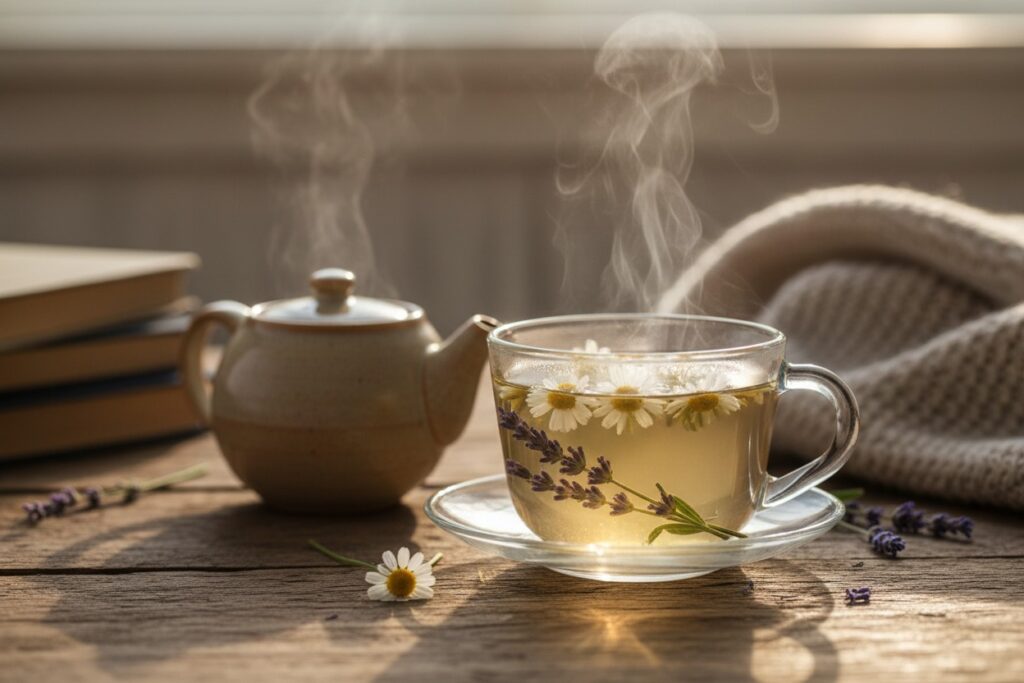
A warm cup of herbal tea in the evening can be a simple, calming way to wind down. Unlike black or green tea, herbal teas are naturally caffeine-free, so they will not keep you awake. Some herbs have been used for centuries to support relaxation, and a few have modest research behind them. This guide looks at seven caffeine-free picks, how to brew them, and what to keep in mind.
This article is general information only, not medical advice. Herbal teas can interact with medicines and are not suitable for everyone, including during pregnancy. If you have a health condition, take medication, or have ongoing sleep problems, speak to a healthcare professional first.
How Herbal Tea Can Help You Relax
Part of the benefit is the ritual itself. Making tea, sitting down and sipping slowly signals to your body that the day is ending. Warmth, a pleasant scent and a quiet moment can all help you feel calmer. Some herbs, such as chamomile and valerian, contain plant compounds that researchers are studying for their calming effects, although the evidence is still limited and results vary from person to person.
Herbal tea is not a treatment for insomnia or anxiety. If you regularly struggle to fall asleep, snore heavily, or feel exhausted during the day, get professional advice rather than relying on tea alone.
1. Chamomile
Chamomile is the best-known bedtime tea, with a gentle apple-like flavour. It contains apigenin, a compound studied for its calming effects. Some small studies suggest chamomile may help people feel more relaxed and sleep a little better, although more research is needed. It is usually well tolerated, but people allergic to daisies, ragweed or chrysanthemums should avoid it.
2. Valerian Root
Valerian root has a strong, earthy smell and is often used in sleep blends. Some studies suggest it may shorten the time it takes to fall asleep, but results are mixed and it can cause vivid dreams or morning grogginess in some people. Valerian can interact with sedatives and other medicines, so check with a pharmacist or doctor before trying it.
3. Lavender
Lavender is better known for its scent than its taste, and its floral tea is mild and soothing. Research on lavender scent suggests it may help people feel calmer, and drinking the tea can be a pleasant part of a bedtime routine. Use a small amount, as too much can taste soapy. If you are pregnant or taking medication, ask a healthcare professional first.
4. Passionflower
Passionflower tea has a mild, grassy taste and is often included in calming blends. A few small studies suggest it may help reduce anxiety and improve sleep quality, but the evidence is limited. It may interact with sedative medicines, so it is best to check with a healthcare professional before use, especially if you are pregnant.
5. Lemon Balm
Lemon balm, a member of the mint family, has a fresh lemon scent and a gentle taste. It has traditionally been used to ease restlessness, and some small studies suggest it may help people feel calmer. It is a good choice if you find chamomile too floral. People taking thyroid or sedative medicines should get advice before using it regularly.
6. Peppermint
Peppermint tea is refreshing rather than sleepy, but many people find it relaxing after a meal. It is caffeine-free and may help with bloating or indigestion, which can make it easier to settle down for the night. However, peppermint can worsen heartburn in some people, so it is not the best choice if you have reflux.
7. Rooibos
Rooibos, also called red bush tea, comes from South Africa and has a naturally sweet, nutty taste. It is caffeine-free, low in tannins and rich in antioxidants. It does not have the same sleep research as chamomile or valerian, but it is a pleasant, gentle evening drink, and it works well with a little milk or honey if you like.
How to Brew Herbal Tea for Bedtime
Use fresh, just-boiled water and steep most herbal teas for 5 to 10 minutes, covered, so the aromatic compounds stay in the cup. Drink it 30 to 60 minutes before bed, as part of a calm routine: dim the lights, put your phone away, and avoid bright screens. Keep the cup small in the evening so you are not waking up in the night to use the bathroom.
For more on natural remedies and when to seek advice, see Natural Remedies for Enlarged Adenoidid: Do They Work? on B Corner.
Frequently Asked Questions
What is the best herbal tea for sleep?
Chamomile is the most popular and best-studied choice for relaxation, while valerian and passionflower are also used for sleep. There is no single best tea for everyone, so try one at a time and see how you feel.
Can I drink herbal tea every night?
Most people can drink a cup of chamomile, lemon balm or rooibos most evenings, but it is sensible to vary your teas and take breaks. If you take medication or have a health condition, check first.
Are herbal teas safe during pregnancy?
Some herbal teas are not recommended during pregnancy, and advice varies by herb and by trimester. If you are pregnant or breastfeeding, ask your doctor or midwife before drinking herbal teas regularly.
Will herbal tea cure insomnia?
No. Herbal tea can support a relaxing bedtime routine, but it is not a treatment for insomnia. If sleep problems last more than a few weeks, speak to a healthcare professional.
Conclusion
The best herbal teas for sleep and relaxation are the ones that help you slow down and enjoy a calm evening. Chamomile, valerian, lavender, passionflower, lemon balm, peppermint and rooibos are all caffeine-free, and each offers a different flavour and level of evidence. Choose one or two, brew them properly, and make them part of a regular bedtime routine. If sleep problems persist, or you take medication, talk to a healthcare professional for advice.