
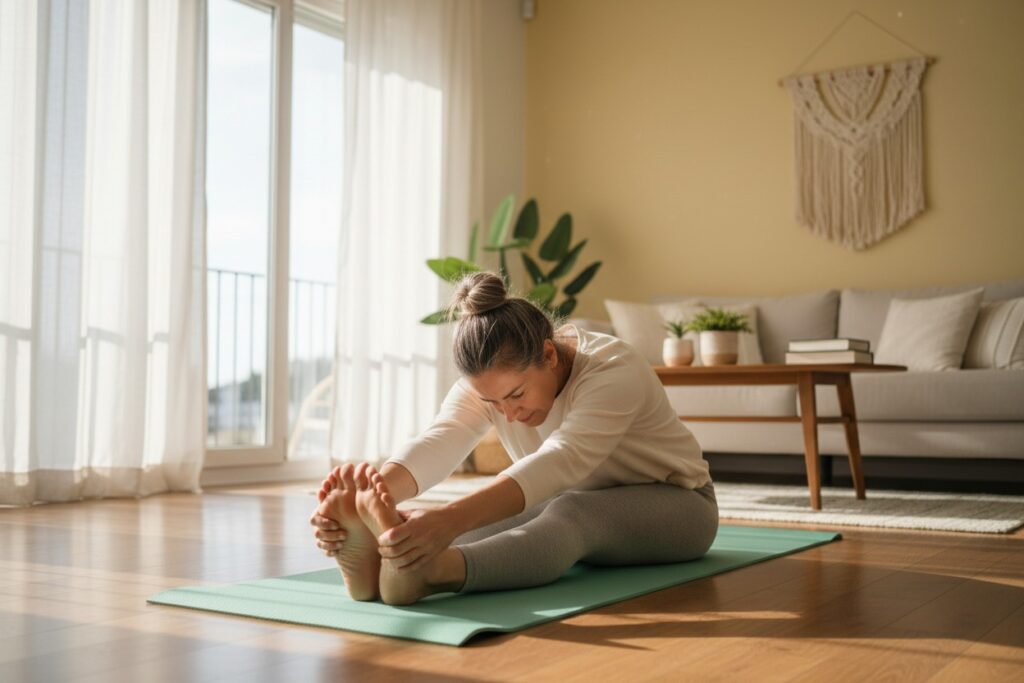
Starting exercise after 40 can feel daunting, especially if your knees, hips or back are not as forgiving as they once were. The good news is that you do not need a gym, equipment or an hour a day to feel stronger and more mobile. This 15-minute home workout for beginners over 40 uses only your body weight, moves at a gentle pace, and is designed to be kind to your joints.
Always listen to your body. If you have a health condition, an injury or pain that worries you, speak to your GP or a physiotherapist before starting a new exercise routine. This article is general information only, not personal medical advice.
Why 15 Minutes Is Enough
Short, regular workouts beat occasional long ones. Fifteen minutes is long enough to raise your heart rate, work the main muscle groups and improve balance, yet short enough to fit into a busy day. Doing this routine three to five times a week builds strength and stamina gradually, without leaving you exhausted or sore for days.
As we get older, muscle strength, balance and flexibility naturally decline, but regular movement slows that process. Gentle strength work also supports the muscles around the knees and hips, which can ease everyday activities such as climbing stairs or getting up from a chair.
Before You Start
Clear a small space in your living room, wear comfortable clothes and supportive shoes, and keep a chair or wall nearby for balance. Have a glass of water ready. Warm up first, move slowly, and never force a movement through pain. If an exercise hurts, skip it or make it smaller and try again next time.
The 15-Minute Routine
Work through the routine in three parts: a 3-minute warm-up, a 9-minute main circuit, and a 3-minute cool-down. Rest whenever you need to, and breathe normally throughout.
Warm-Up (3 minutes)
March on the spot for one minute, lifting your knees gently. Then roll your shoulders backwards ten times, and circle each ankle slowly. Finish with slow arm swings across your chest. The aim is to feel warm and loose, not out of breath.
Main Circuit (9 minutes)
Do each move for 40 seconds, then rest for 20 seconds before the next one. Repeat the circuit twice.
1. Chair squats. Stand in front of a chair, feet hip-width apart. Lower yourself as if to sit, lightly touch the chair, then stand up. Hold the chair for balance if needed.
2. Wall push-ups. Stand an arm’s length from a wall, hands on the wall at shoulder height. Bend your elbows to bring your chest towards the wall, then push back. This is much kinder to wrists and shoulders than floor push-ups.
3. Standing leg lifts. Hold a chair, lift one leg to the side slowly, lower it, then switch sides. This works the hips and improves balance.
4. Gentle marching with arm raises. March on the spot while raising your arms overhead, then lowering them. Keep your core steady and your steps small.
5. Seated or standing rows with a towel. Hold a towel with both hands, pull your elbows back as if rowing, and squeeze your shoulder blades together. This is good for posture, especially if you sit a lot.
6. Calf raises. Hold a chair, rise onto your toes slowly, then lower down. This strengthens the lower legs and ankles.
Cool-Down (3 minutes)
Walk slowly around the room, then stretch gently: reach your arms up, stretch each leg, and roll your neck slowly from side to side. Breathe deeply and let your heart rate come down.
A Simple Weekly Plan
Try the routine on Monday, Wednesday and Friday to start, with a rest day or a gentle walk in between. As it gets easier, add a fourth day, or repeat the main circuit a third time. If you miss a day, just pick it up again the next day — consistency over weeks matters far more than perfection.
For more ideas on building healthy habits at home, see Delta Fitness Authority on B Corner.
Tips for Joint-Friendly Exercise
Choose a soft surface such as a rug or yoga mat, and avoid jumping or sudden twists. Move through a comfortable range, not the biggest range you can force. Strengthen gradually: if 40 seconds is too much, start with 20 seconds and build up. Finally, stay hydrated and give yourself a rest day if your joints feel sore the next morning.
Frequently Asked Questions
Is this workout safe for bad knees?
Chair squats and standing leg lifts are usually gentler than deep squats or lunges, but everyone is different. If you have knee pain, keep movements small, use a chair for support, and get advice from a physiotherapist.
Do I need any equipment?
No. This routine uses only your body weight, a chair and a wall. A towel is useful for the rowing move, but it is not essential.
How soon will I notice a difference?
Many people feel more mobile and energetic within two to three weeks. Strength changes take longer, usually six to eight weeks of regular practice, so keep going even if progress feels slow.
What if I cannot finish all 15 minutes?
That is fine. Do one circuit instead of two, or stop after the warm-up and main moves. Shorter sessions still count, and you can build up gradually.
Conclusion
A 15-minute home workout for beginners over 40 does not need equipment, a gym or a high level of fitness. With a gentle warm-up, six simple bodyweight moves and a calm cool-down, you can build strength, balance and confidence in your own living room. Start small, move kindly, and repeat it regularly — your future self will thank you.