
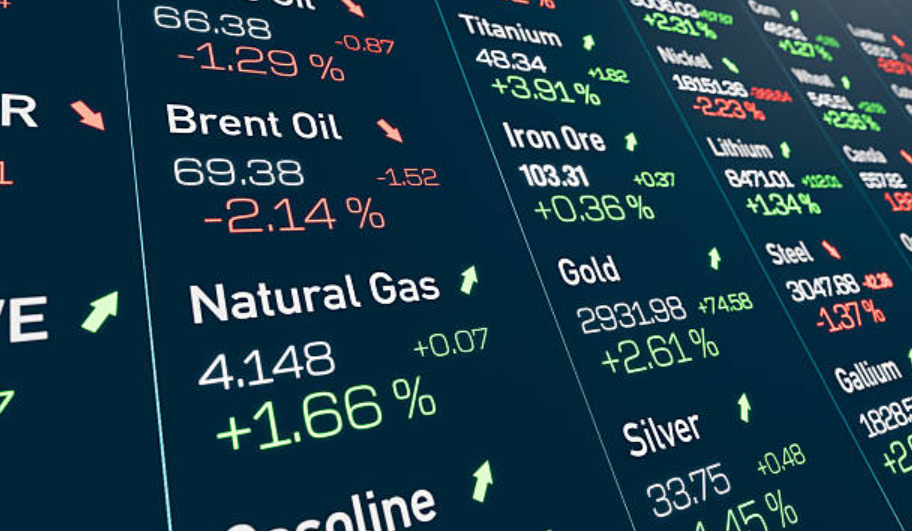
Buying oil stocks in a geopolitically driven price spike is deceptively easy, until it isn’t. WTI crude surged past $113 per barrel in early April 2026 on Strait of Hormuz disruption fears, then shed more than 14% in a single session after a US-Iran ceasefire announcement. That kind of swing exposes how quickly sentiment-driven gains can evaporate.
The companies worth owning aren’t the ones with the highest beta to crude — they’re the ones generating durable cash flow across a wide price range, carrying manageable debt, and operating with break-even costs low enough to stay profitable through the inevitable reversals.
The Metrics That Matter for Oil Stocks
Investors mapping out how to invest in oil stocks at the individual stock level quickly find that standard equity valuation tools don’t translate cleanly to the energy sector. Large capital expenditure requirements and significant depreciation charges suppress net income in ways that make P/E ratios an unreliable guide to value.
EV/EBITDA
EV/EBITDA is the preferred multiple for oil and gas companies. It strips out debt, taxes, and non-cash charges, which produces cleaner comparisons across companies with different capital structures and accounting practices. ExxonMobil’s large capex and depreciation significantly suppress net income, but EBITDA reveals clearer operational strength during oil price surges.
A lower EV/EBITDA signals potential undervaluation. A higher one suggests the market is pricing in significant growth or a risk premium. Unlike P/E ratios, EV/EBITDA accounts for debt and avoids distortion from differing tax rates across international companies, making it the standard starting point for energy sector analysis.
Price-to-Cash Flow
Price-to-cash flow is widely used by energy analysts over P/E because cash flow is harder to manipulate and better reflects operational performance in capital-heavy businesses. Oil companies routinely report net losses during periods of heavy investment while generating strong operating cash flow. P/CF captures that reality in a way earnings-based metrics don’t.
Free Cash Flow Yield
With WTI oscillating between $91 and $113 in early April 2026, free cash flow yield has become a critical screen for identifying companies that can sustain returns across that price range — not just at the top of the swing. Companies with high FCF yield at mid-cycle price assumptions, say $85 to $95 per barrel, can sustain dividends, reduce debt, and buy back shares without depending on a geopolitical premium that can disappear overnight. Those without it are exposed the moment the risk premium evaporates, as April 8 demonstrated.
Break-Even Cost
Break-even cost per barrel is the floor beneath every other metric. It represents the crude price at which a company covers its full cost of production including capital expenditure. With WTI trading near $96 per barrel after its sharp pullback, the pressure point isn’t current prices — it’s what happens if geopolitical calm persists and OPEC+ follows through on its planned May output increase.
What the Numbers Look Like in Practice
The volatile price action of early April 2026 has reshuffled entry points across the sector. Oilfield services companies, which benefit from upstream activity levels rather than crude prices directly, offer a different risk and return equation from pure-play producers.
TechnipFMC (FTI) trades at a forward P/E of approximately 25.5x, with an EV/EBITDA of 15.69x. Analyst consensus points to EPS growth of around 26% for 2026, supported by a five-year average earnings growth rate of roughly 25% annually. The company’s ROE of approximately 29.6% and a debt-to-equity ratio of just 0.39 reflect a business generating strong returns without taking on significant leverage. That combination — services exposure, earnings momentum, and balance sheet quality — sets it apart from upstream producers whose fortunes hinge on where crude closes on any given week.
Gas producers with LNG contracts and low break-even costs offer the most compelling upside for risk-adjusted returns in 2026. LNG export demand, domestic power generation, and AI data center electricity consumption are creating multi-year tailwinds largely independent of crude price direction. A gas-exposed producer with a $40 per barrel equivalent break-even and locked-in LNG offtake agreements looks very different from a crude-dependent shale operator with no hedges in place.
Putting the Metrics Together
No single metric tells the full story. The most reliable approach combines several screens:
- EV/EBITDA relative to sector peers and historical averages, keeping in mind that upstream E&P companies typically trade in the 3–7x range while oilfield services names command higher multiples
- FCF yield stress-tested at mid-cycle crude prices, not geopolitical spike prices
- Break-even cost versus WTI and Brent forward curves
- Debt-to-EBITDA to assess balance sheet resilience during a prolonged price downturn
- Dividend coverage ratio to determine whether current yields are sustainable
Applying those screens in early 2026 produces a smaller investable universe than the 2021–2022 supercycle did. Fewer companies pass all five tests at mid-cycle price assumptions, but the ones that do offer a more defensible return profile than a broad sector bet riding a geopolitical premium.
Does Valuation Alone Make an Oil Stock Worth Buying?
Cheap on a multiple basis isn’t the same as worth buying. An oil stock can screen well on EV/EBITDA and FCF yield and still be a poor investment if the underlying business is in structural decline, if management has a track record of poor capital allocation, or if the geopolitical environment surrounding its operations is deteriorating.
The Strait of Hormuz risk that pushed WTI above $113 briefly in April 2026 is the same risk that can reverse in a single news cycle. OPEC+ production discipline, which multiple analysts cite as a support mechanism for the second half of 2026, has historically been inconsistent. US crude inventories remain elevated, adding further downward pressure to any price recovery thesis.
Valuation metrics narrow the field and identify where the numbers make sense. Qualitative judgment on management quality, operational track record, and macro exposure determines which of those names are actually worth holding through a year where crude can move $17 per barrel in a single session.
The combination of disciplined metric screening and realistic assumptions about crude price ranges gives investors the clearest picture of where value actually sits in the oil sector heading into the second half of 2026.